Le Chant du Glacier
Filming in the Arctic with DILLING
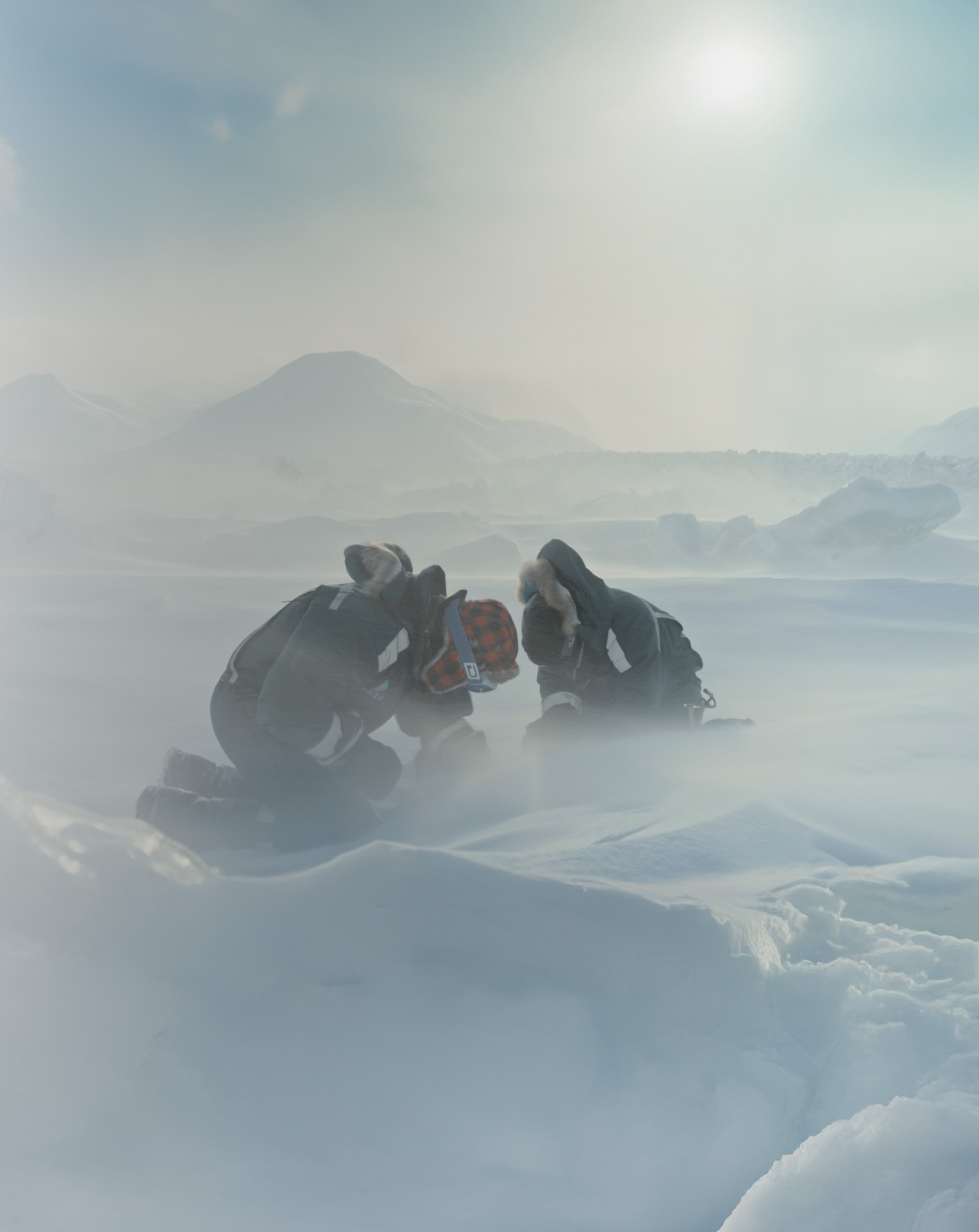
In March 2025, a film crew travelled to the small Norwegian archipelago of Svalbard, located in the High Arctic, to begin filming their documentary Le Chant du Glacier – The Song of the Glacier.
During the expedition, director, Chloé, cinematographer, Erwan, and glaciologist, Ugo, were all dressed in DILLING. In the following, the crew generously share the purpose of the project and the film, their experiences from the journey – and their reflections on wearing wool clothing in extreme sub-zero temperatures.
The Song of the Glacier
“In March, we travelled to Svalbard to begin Le Chant du Glacier (The Song of the Glacier). There were three of us: Chloé, the director; Erwan, the cinematographer; and Ugo, a glaciologist. We were there to follow Glacier Lamentation, a project that listens to glaciers and turns their voices into music.
We weren’t there to film a landscape in the usual way. We were there to listen to something you don’t normally hear: the glacier itself.”
Listening to ice instead of reading graphs
“Glacier Lamentation brings together musicians, artists and scientists. Instead of starting from graphs and statistics, it starts from sound.
Microphones are placed directly on the ice, inside glacier caves and in the surrounding environment. Vibrations travel through the ice, the air, the rock; they are recorded, transformed and used to create unique compositions based on improvisation. One of the core ideas is to work closely with scientists and, in a way, to turn data and measurements into something you can feel as sound and emotion, not just understand as information.
Climate change is often communicated with curves, models and predictions. They are essential, but many people feel overwhelmed or numb when they see them. We are not purely rational beings. We also react to emotion, to sensations, to what cannot easily be put into words. With this music, we hope people will feel mixed, even contradictory emotions – beauty and violence, strangeness and tenderness, sadness and a form of quiet joy – and that this mixture can create attention, maybe even begin to take action against climate change.
All of this took place in a place where climate change is anything but abstract: Svalbard.”
Svalbard: beautiful, exposed, fragile
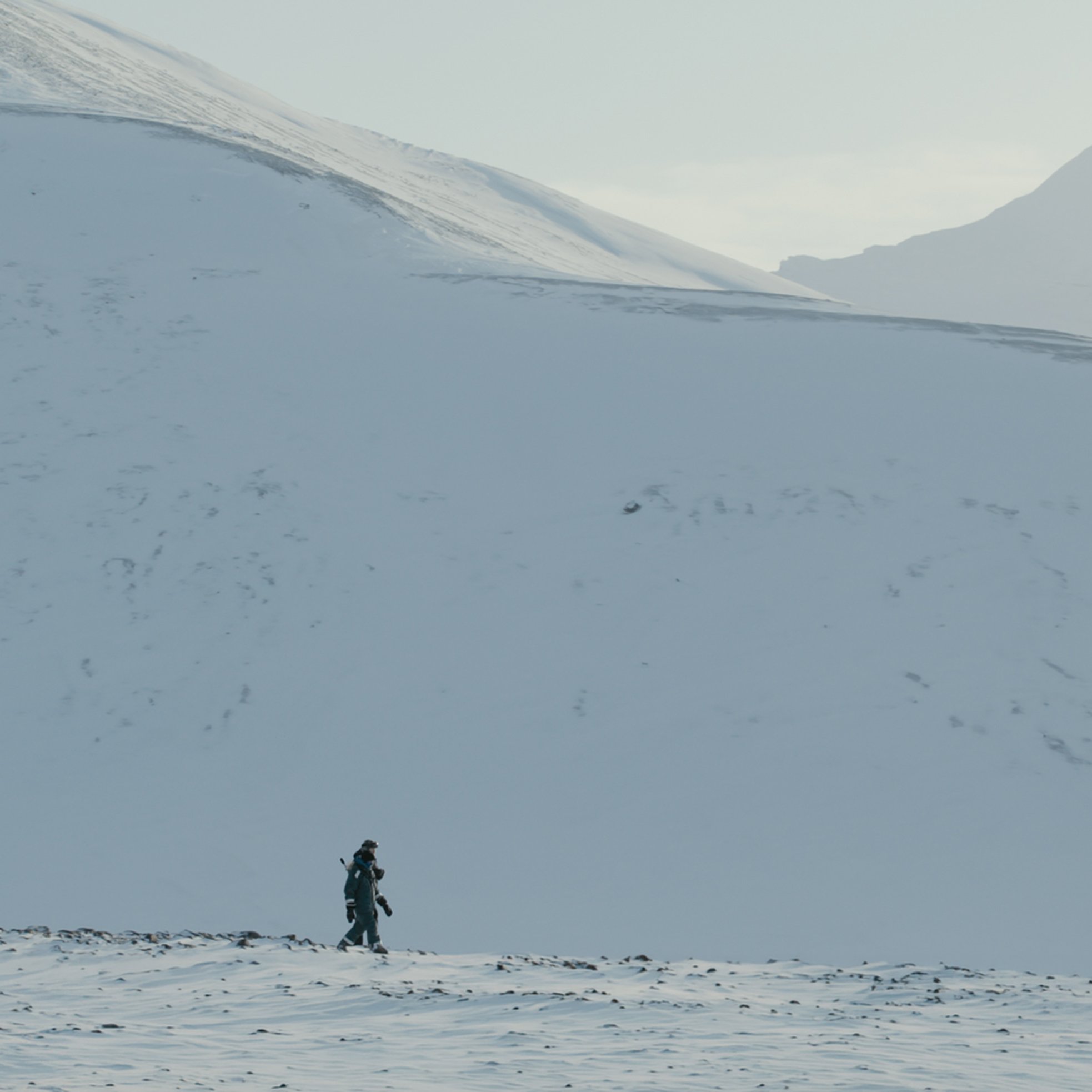
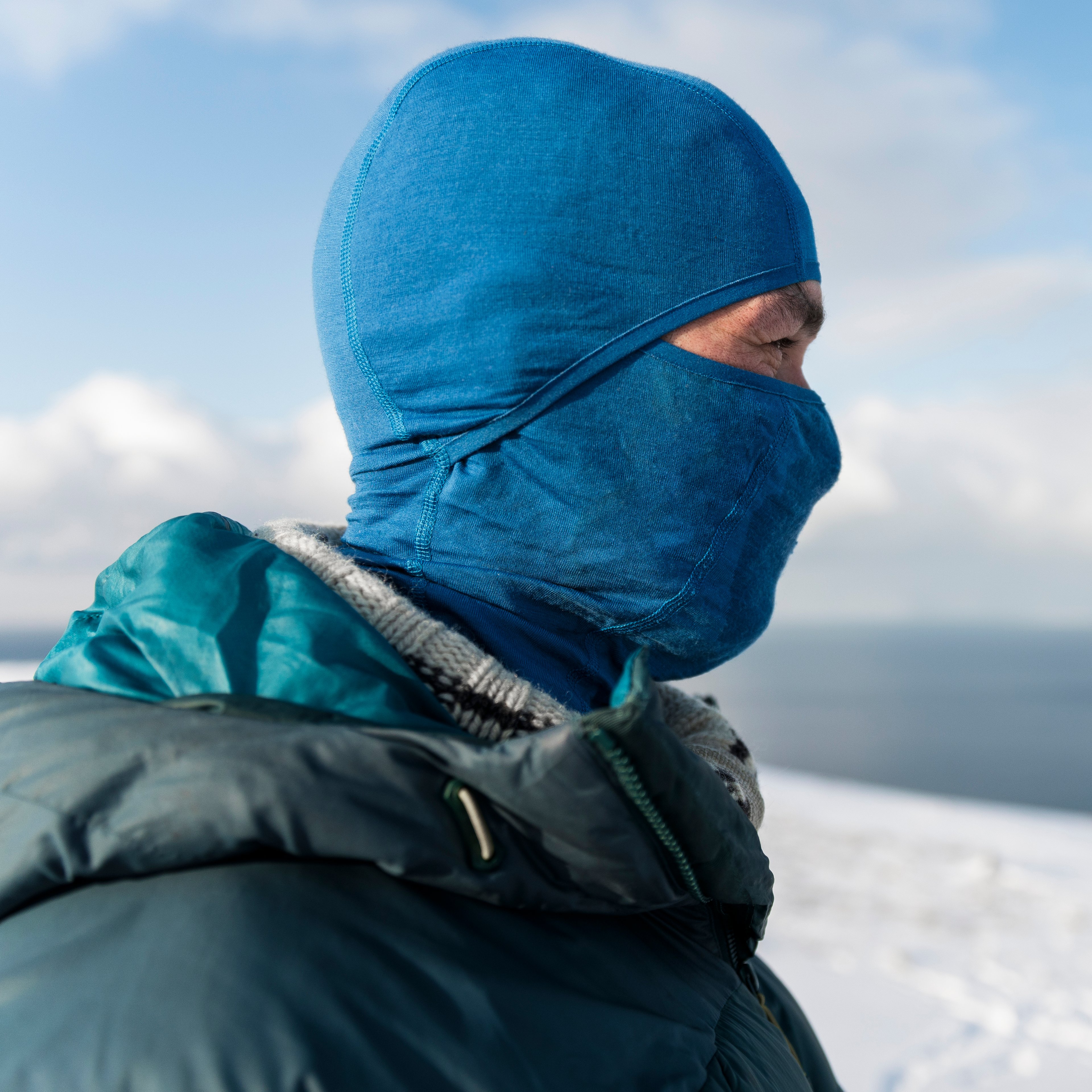
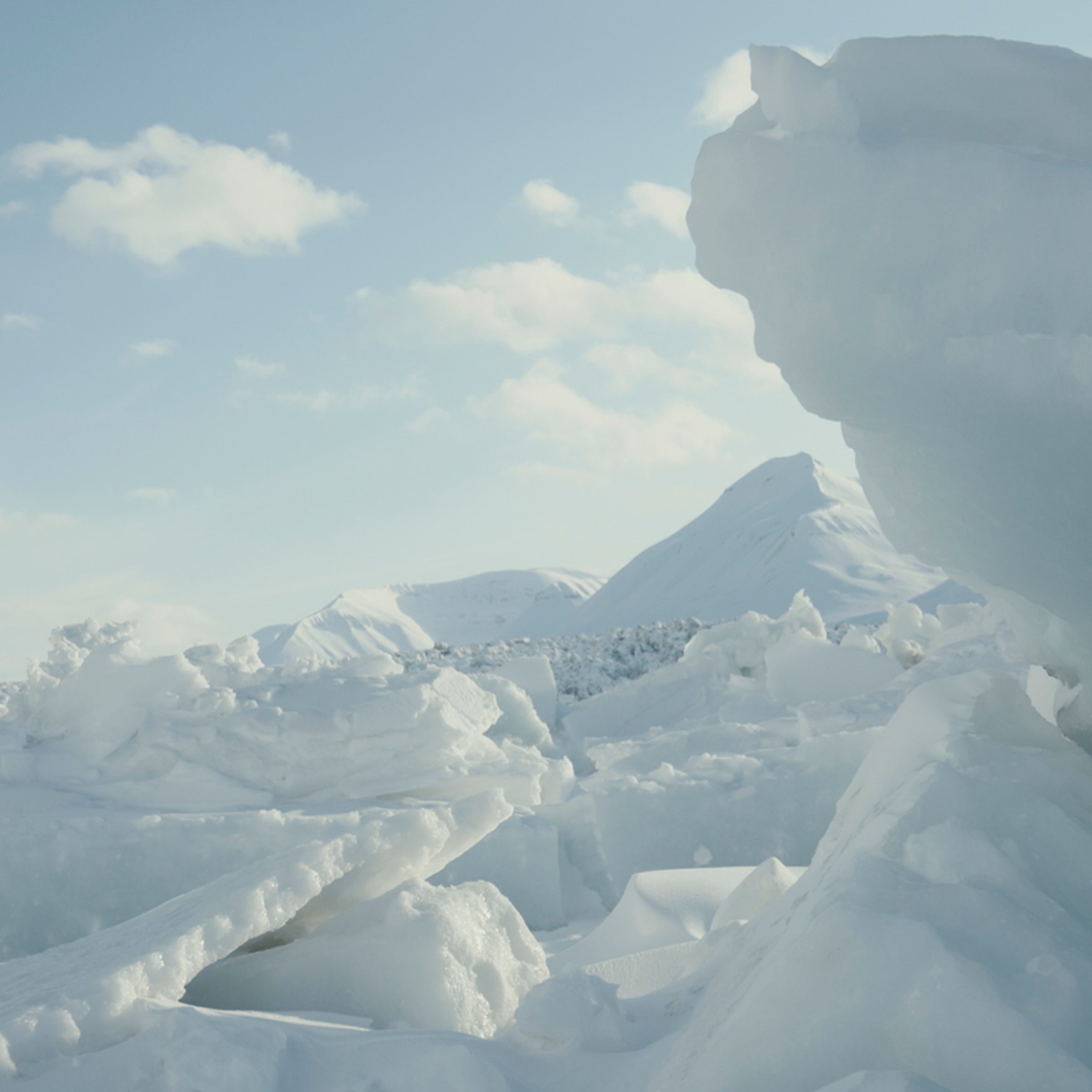
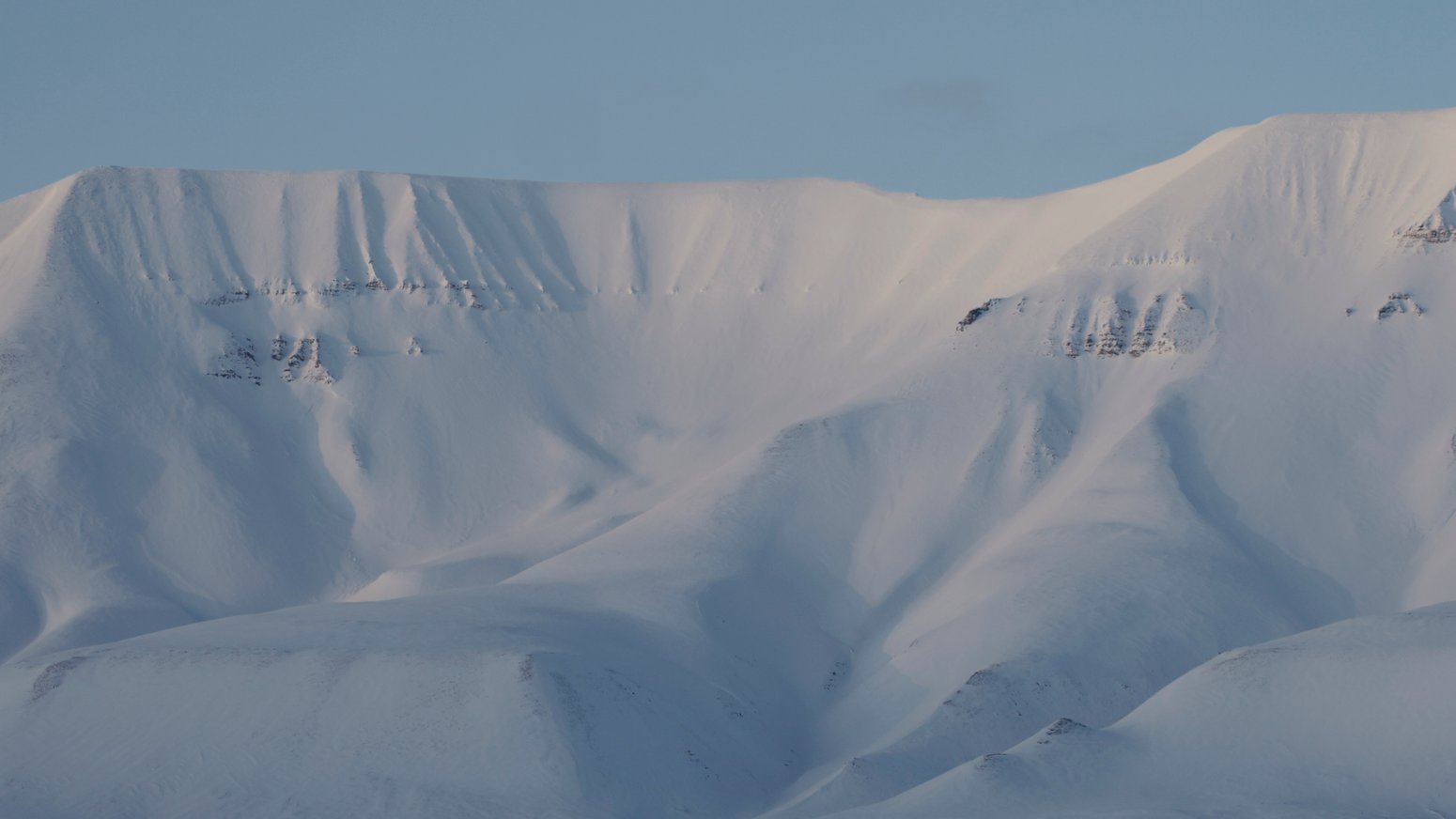
“Svalbard is a small Norwegian archipelago in the high Arctic, between mainland Europe and the North Pole. There are no forests – only bare mountains, glaciers and sea ice. The towns are tiny and surrounded by emptiness. In winter, the sun stays low or does not rise at all for weeks at a time, and the days often sink into a deep blue twilight.
For the scientists we met, Svalbard is also one of the “front lines” of global warming: around 60% of the territory is covered by glaciers, and the region is warming seven times faster than the global average. The climate crisis is written directly in the ice.
It is magnificent and quiet, but there is always a tension under the surface. Storms can arrive quickly. Visibility can disappear in minutes. Outside the settlements, you move in, what is very clearly, polar bear country. All of these ideas about change and fragility might sound abstract on a page, but they stop being abstract the moment you step onto the ice and start working.”
When cold becomes part of the job
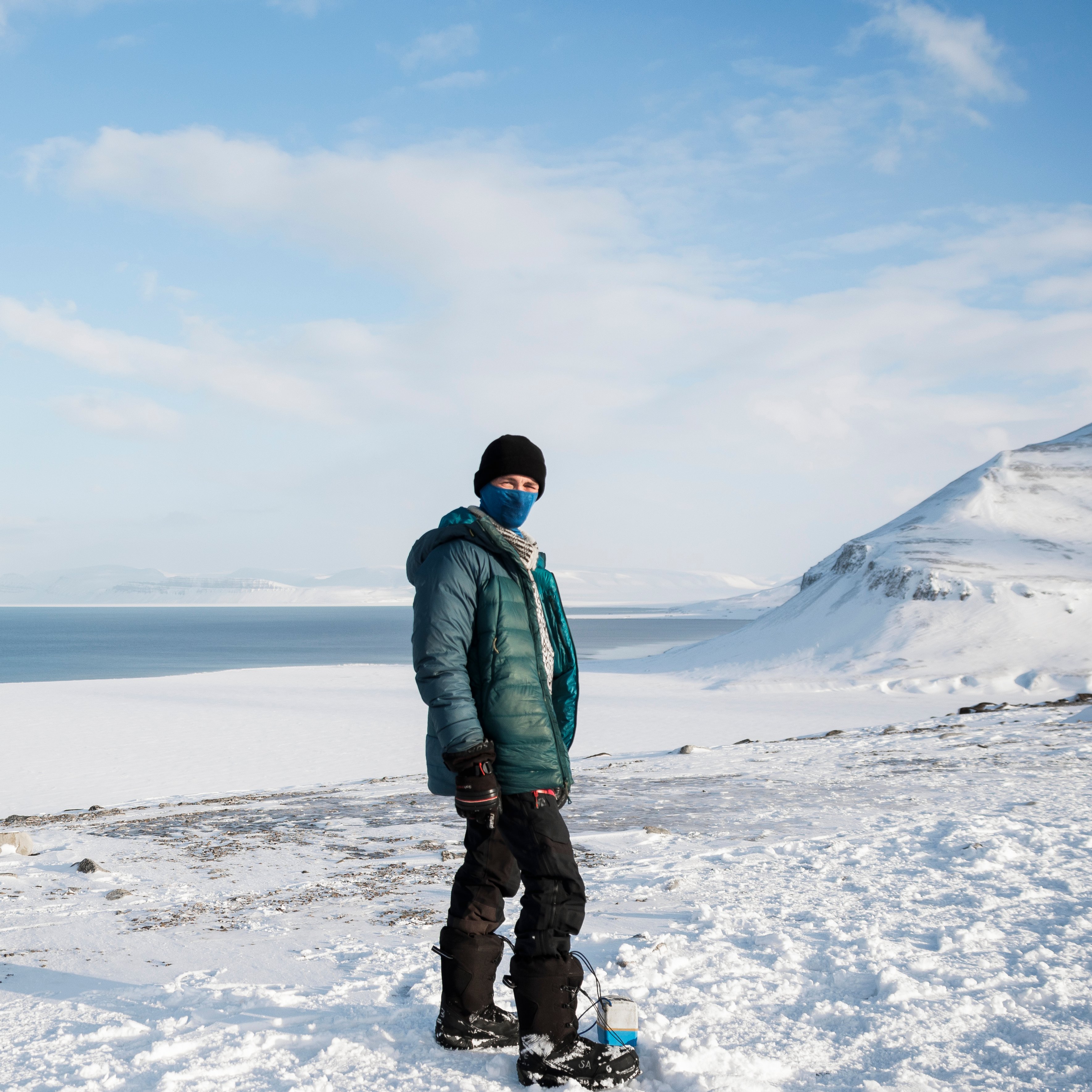
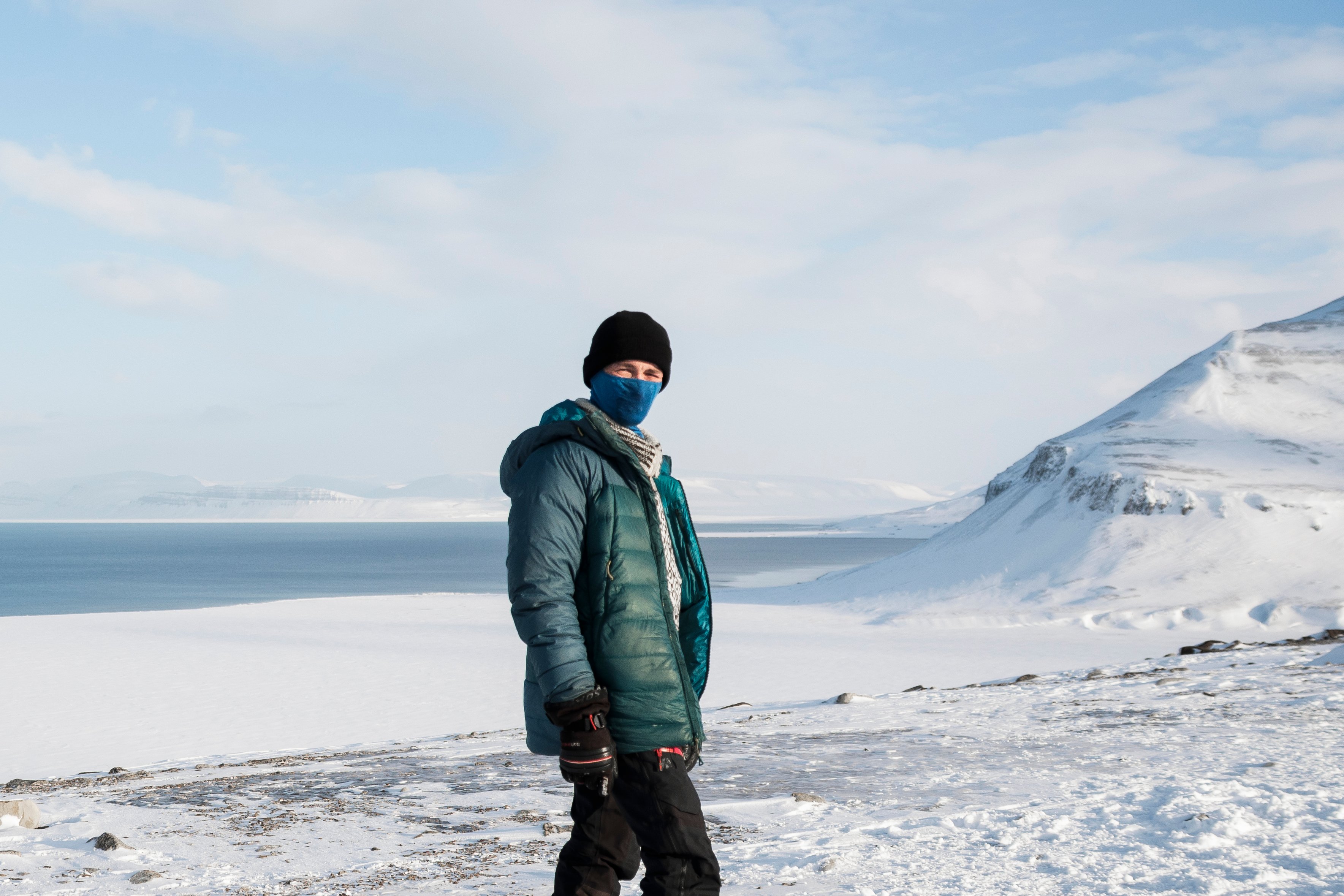
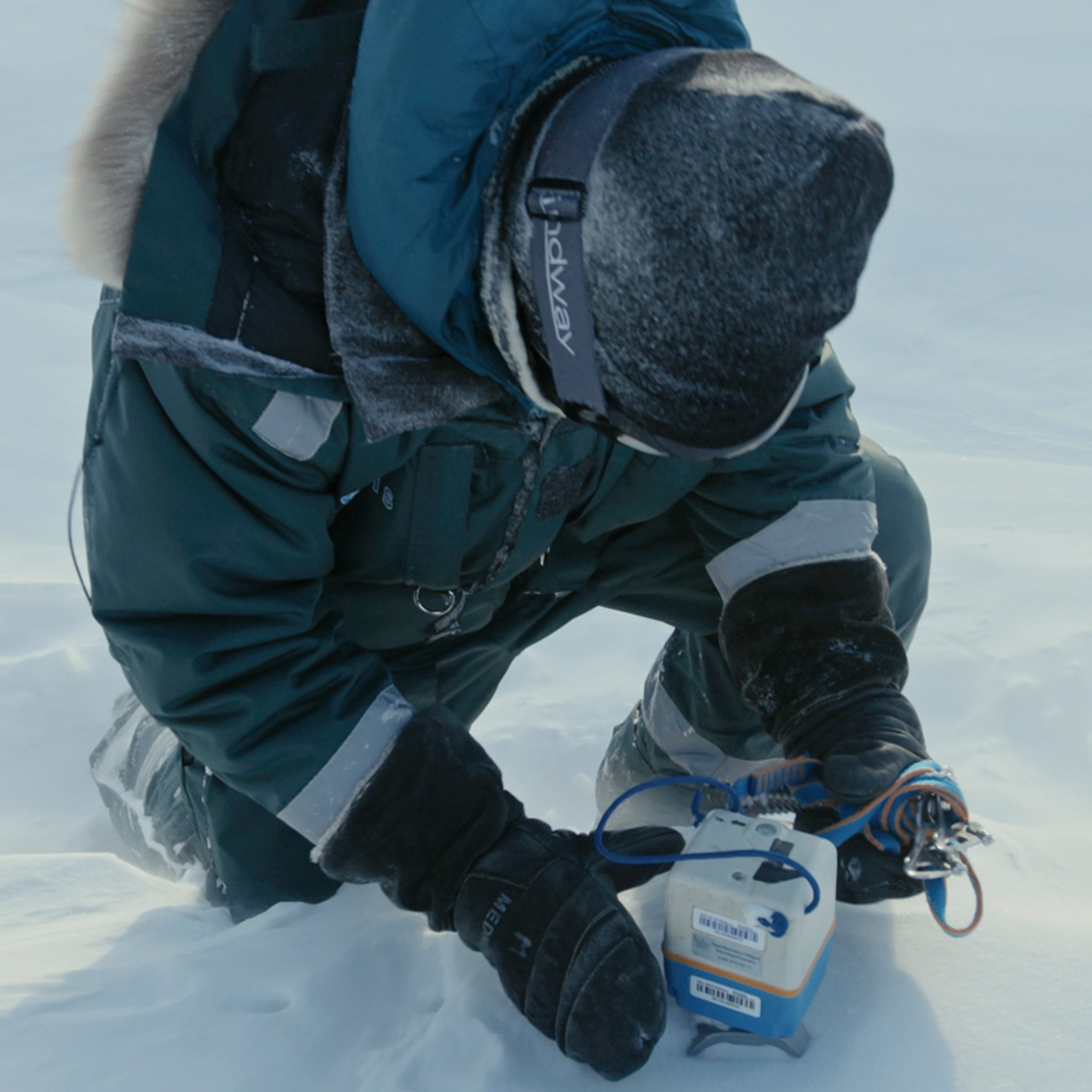
“At –20 to –30 °C, the cold is no longer just a number on a weather app. It becomes a constant presence. It tests your body, slows every movement and multiplies fatigue. Simple actions – opening a bag, changing a lens, tightening a strap, pressing a small button on the camera – suddenly require more time and more concentration.
As a small film crew, we had to carry cameras, lenses, sound equipment and safety gear. On the technical side, there were only two of us. Our luggage had to stay as small and as light as possible, but outside we still had to cope with hours in the cold. In these conditions, everything is amplified, and the margin for error is small: for the image, for the sound – and for our bodies.”
Wool is the only thing that works up there
“Before we left, a lot of conversations revolved around one simple question: what do we actually wear to work? Ugo, who has spent years working in the Arctic, gave us a very short answer:
“Wool, wool, wool and more wool. That’s the only thing that works up there.”
So, we followed his advice and travelled with DILLING merino wool clothing.
Out on the ice, clothing quickly stopped being a background detail and became part of the work. One sentence from Ugo made that very clear. One day, in heavy blowing snow, he told us:
“Never put your gloves down. If you take them off, take the time to put them away properly. Don’t just drop them somewhere. With this wind, if you lose your glove, you lose your hand.”
That was a very clear reminder that on the ice, your clothing is not just about comfort. It’s about your ability to keep working safely.”
Layers that move with you
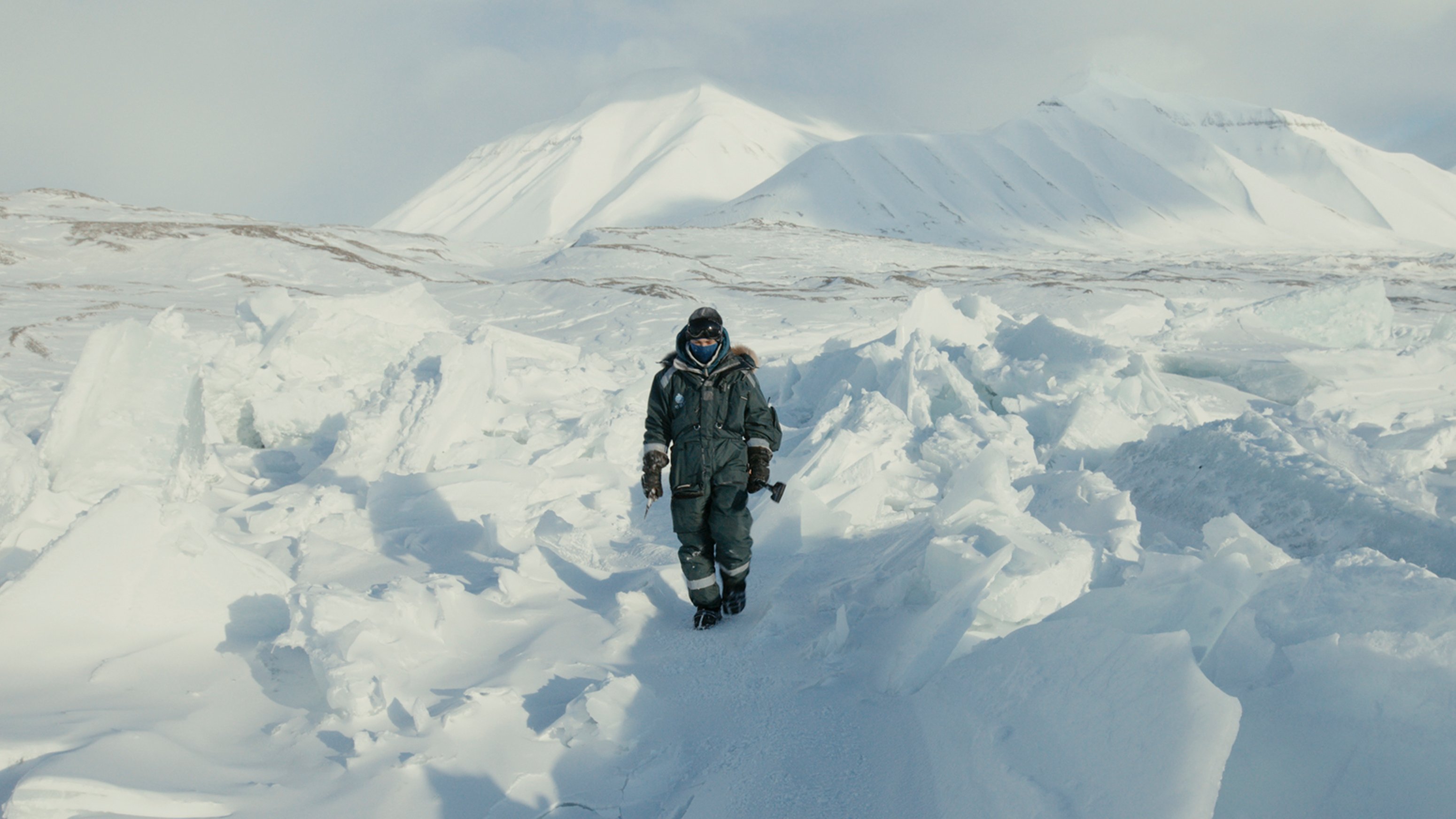
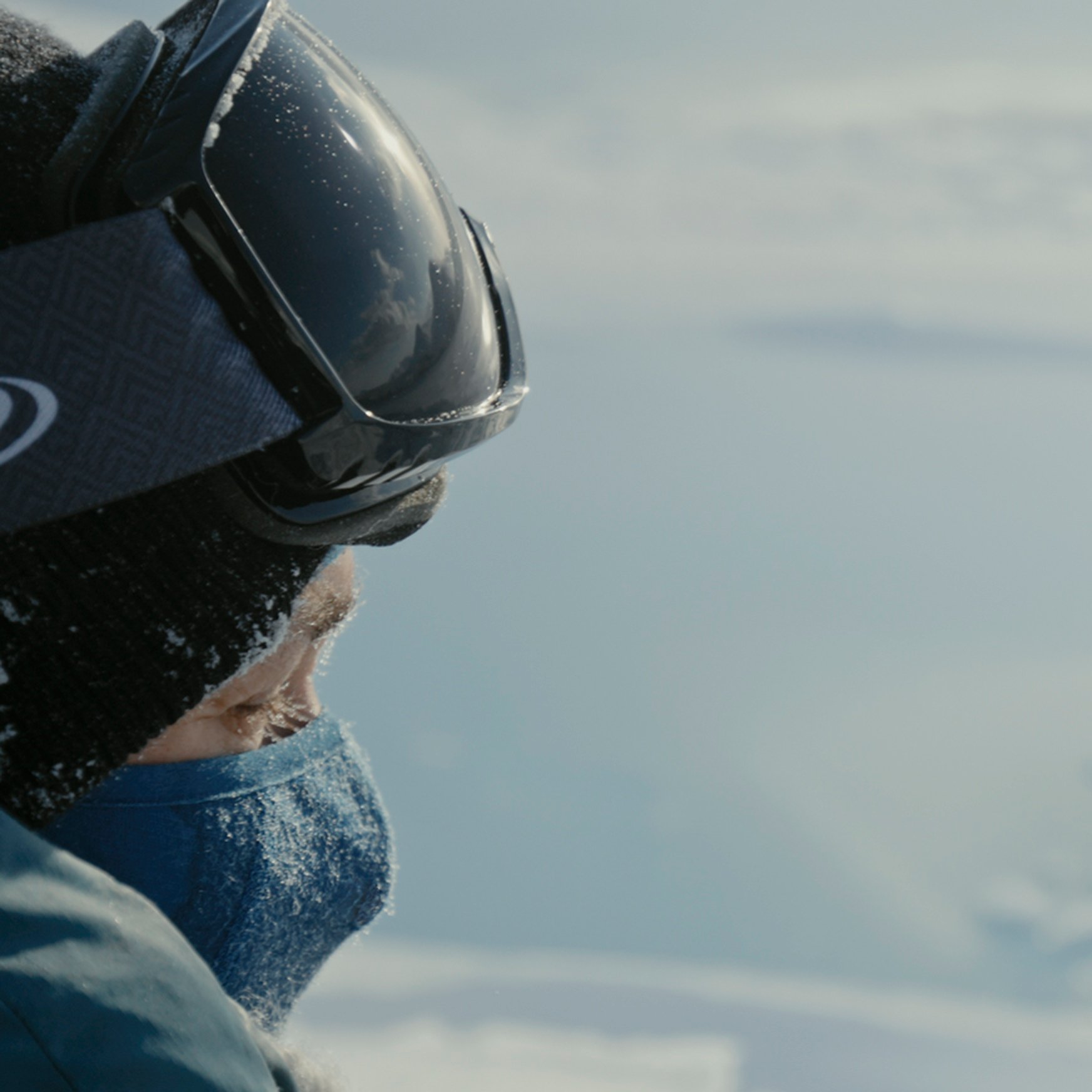
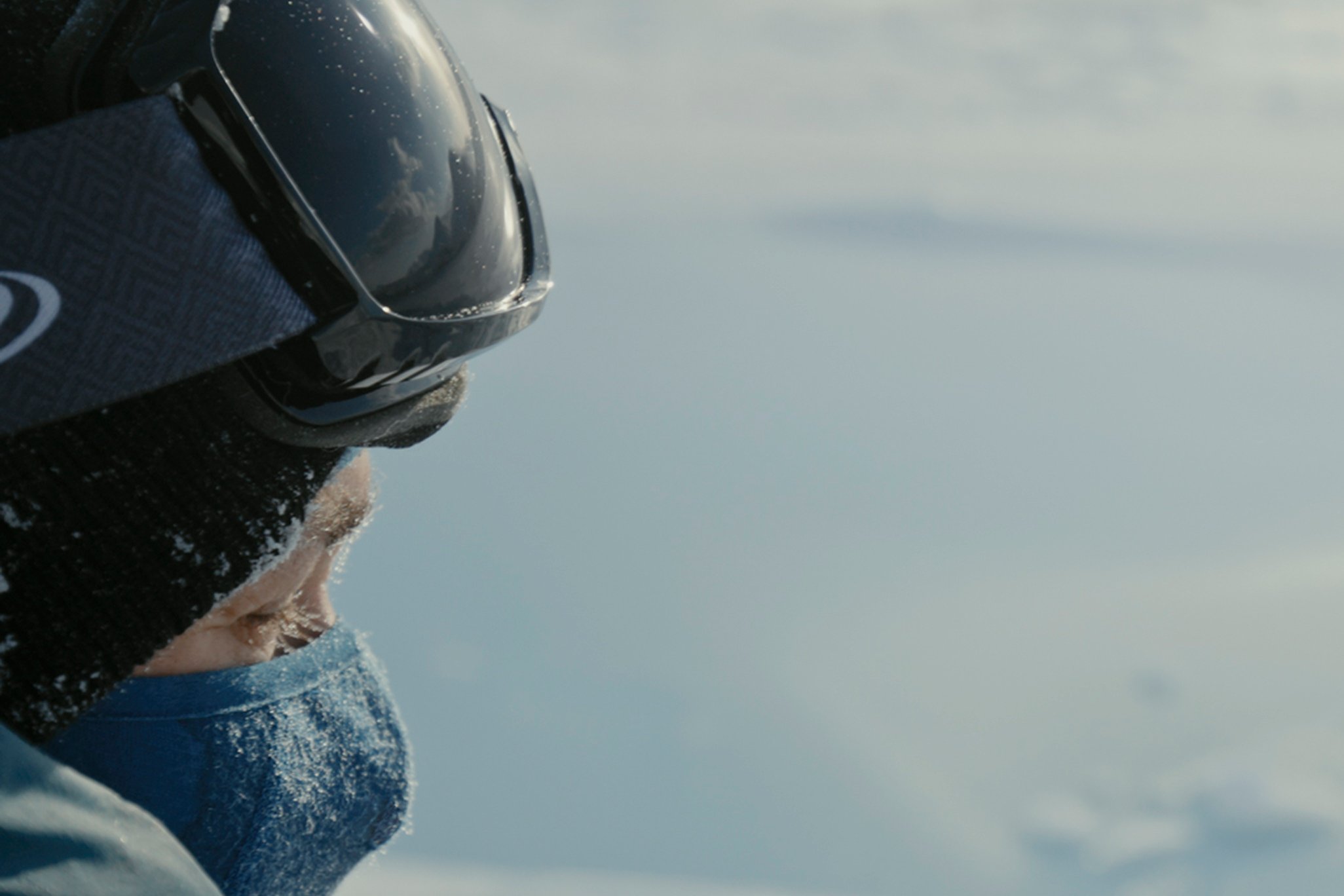
“On the coldest days, we were always wearing multiple layers on the body. Against the skin came merino base layers – long-sleeved tops and leggings – with a merino fleece as a mid-layer. On top of that, we added our ski clothing, and finally the snowmobile suit we wore most of the time outdoors.
For the head, we used merino balaclavas, sometimes combined with a thicker snowmobile balaclava and a beanie on top. Neck warmers protected the face and neck when the wind picked up.
For the feet, we made one surprisingly important discovery: one good pair of wool socks worked better than two layers. With a single pair, our feet stayed warmer and we avoided compressing them, which would have reduced circulation. Cold feet can ruin an entire day of work – and in these conditions, it can quickly turn into a safety issue.”
“That’s where wool is very special”
“Our days had a very particular rhythm. One moment we were standing almost still in an ice cave, in the dark, listening to the glacier and recording. The next, we were riding snowmobiles along a frozen valley or walking in the wind across an open plateau. We were constantly adding or removing layers as we moved between stillness and effort, wind and shelter.
No matter how careful you are, in that stop-and-go rhythm you end up sweating at some point. There are moments when you simply get damp, even if you try to avoid it. That’s where wool is very special: unlike synthetic materials, it still keeps you warm when it is wet instead of turning cold and putting you in danger.”
One set of base layers was enough
“Our days could stretch to twelve hours, and access to a washing machine was far from guaranteed. Our bags were already full of film gear, so we didn’t have the luxury of packing endless changes of clothes. Thanks to the natural properties of merino wool, we could wear the same base layers for several days in a row without bad smells becoming an issue. For an expedition where every kilo counts, that mattered.
In terms of comfort, DILLING’s clothing did exactly what you hope technical clothing will do: it disappeared. At any given moment, each of us already had around ten kilos of personal clothing and safety equipment on us – and the film gear came on top of that – so we never felt particularly light or elegant in our movements. But the merino base layers and the fleece never added extra constraints. Most of the time, we forgot we were wearing them. If you don’t have to think about what you’re wearing, you can think about your work.”
The same layers, different stakes
“Back home in France, the climate feels gentle in comparison. But the wool pieces didn’t become souvenirs of the expedition. We still use them regularly. The fleece has become a favorite in everyday life. The merino base layers now come with us on winter night shoots and long days outside. Where we needed many layers in the Arctic, here we often just a single base layer under one outer shell. It’s enough to keep us warm for hours, and it gives us more freedom of movement when we work.”
A film about links
“Le Chant du Glacier is a film about links: between science and art, between humans and their environment, between data and emotion. For us, it is also a film about layers: scientific data and musical improvisation, harsh landscapes and intimate sounds, the physical reality of the work and the emotional impact it can have on an audience. Working in Svalbard showed us how all these layers depend on each other, from the instruments and measuring devices to the very clothes you put on, closest to your body.
When you’re not constantly fighting the cold, you can pay attention to what matters: the glacier, the people you’re filming. DILLING’s clothing quietly gave us the time and comfort we needed to stay outside and keep listening.”
2026: Returning to the Arctic with DILLING
The film crew will return to Svalbard on 1 February 2026 to continue filming. We’re proud that they’ve once again chosen to bring DILLING wool clothing on their expedition.
We will continue to follow the crew and the project in the Arctic.
The documentary “The Song of the Glacier” by Chloé Reymond, co-written with Ugo Nanni.
Photography: Erwan Le Cornec. The film is expected to premiere in 2027.
Explore more